

Prediction Market Manipulation: The Paradox Explained

- Dr. Rajiv Sethi Economist · Columbia University
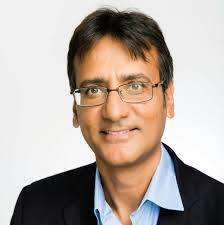
Economist Rajiv Sethi separates three kinds of prediction market manipulation and explains why a market nobody can rig is a market nobody believes in.
Key takeaways
- Sethi's paradox: prediction market manipulation can be neither excessive nor completely absent, because a market nobody believes is not worth rigging and a market everybody believes is worth rigging most.
- A prediction market price reflects the spread of trader risk tolerance, budgets and the market's own design, rather than averaging what traders believe.
- Resolution disputes, the vector crypto Twitter argues about, rank as the least consequential of the three he identifies.
- Wash trading hit close to 60% of Polymarket volume at its December 2024 peak, per a Columbia paper Sethi co-authored.
- In 2012 InTrade data, 87 to 90% of traders never once switched sides. Roughly 5% set the price.
- His top regulatory fix is enforceable third-party KYC, not a ban on markets.
Chapters
The uncomfortable equilibrium inside every prediction market
What a prediction market price actually means
"It's not obvious what that price means, because the market doesn't have a belief and traders disagree with each other. Many people think of it as a kind of an average belief, but it's certainly not that. It depends on the distribution of risk tolerance, budgets and so on, and even the design of the market."
"They're either Romney bettors or Obama bettors, so they're not really willing to look at what's going on in the world and switch the side of their bets."
Three kinds of manipulation, and only one he loses sleep over
| Vector | How it works | Concern level |
|---|---|---|
| Resolution manipulation | A dispute process settles a contract against the beliefs of most traders | Real but contained |
| Derivative market manipulation | A second market pays out based on the price in a primary market, so pushing that price becomes directly profitable | Underrated, structurally open |
| Reflexive event manipulation | Beliefs about the outcome help cause the outcome, as in elections | The one that matters |
The derivative vector is the one almost nobody documents. His example is a market on the return of Jesus Christ, alongside which someone built a second market paying out if the primary price cleared five cents.
"You can buy contracts in the derivative market, push up the price above five cents. It just needs to go up there for a certain period of time and make money, and then the primary market price becomes a little meaningless."
The same structure appeared around the Harris-Trump race. It did not pay off. The mechanism is still sitting there.
The third category is where he spends his worry.
"Elections are reflexive events. So your belief about the outcome affects the actual outcome. If a campaign is thought to be losing momentum, it can demoralize supporters and cause a self-fulfilling feedback loop. The fundraising can dry up, volunteer effort can dry up."
His 2012 work found the pattern in the tape. One account, since known as the Romney whale, drove roughly a third of Romney-side transactions and lost seven million dollars, trading in a way that looked like an effort to hold the price up.
The paradox: neither excessive nor absent
Credibility is the asset that makes a market worth attacking. Audiences discount a campaign spokesman telling them to ignore a poll, Sethi notes, because the motive is visible. Markets get no such discount.
"With markets, there's a temptation to see it as somehow objective and truthful."
Which produces the paradox in full:
"A market that is believed, taken very seriously, is the one that is most tempting to manipulate. If people think it's manipulated, there's no point in manipulating it, because nobody takes it seriously. It cannot be excessive, because it will destroy the credibility of the market. And it cannot be absent, because if it's absent, that's when the incentive to do it is strongest."
A healthy prediction market therefore sits permanently at an equilibrium containing some manipulation. Any platform promising an unriggable oracle is promising the exact condition that makes rigging it most lucrative.

The volume problem: wash trading peaked near 60%
Sethi's newest empirical work targets a different claim: how much reported volume is real. Network-Based Detection of Wash Trading is led by Columbia PhD student Allen Sirolly, with Hongyao Ma, Yash Kanoria and Sethi.
Wash trading generates huge volume from very little capital, because the same money cycles between wallets one person controls. That signature alone proves nothing:
"This alone cannot identify wash trading, because this is exactly what market makers do."
So they used network structure. A real market maker trades with whoever arrives, meaning mostly with counterparties who look nothing like them.
"Whereas wash traders are trading systematically with counterparties who look like them."
Iterate that clustering test three or four times and the clusters fall out. At the December 2024 peak the method flags close to 60% of Polymarket volume, concentrated before the platform charged fees.
"Polymarket volume claims should be treated with a bit of skepticism."
Those claims fed valuations, and nobody has audited them. He stops short of accusing the platform, noting its data staff engaged with the paper and said they want the number down.
What Sethi would change
Asked what he would fix first, Sethi reaches for identity rather than bans.
| Fix | Mechanism | Limit he acknowledges |
|---|---|---|
| Enforceable KYC | Third-party verification recorded as an onchain certificate, identity discoverable only under warrant | Sophisticated laundering defeats it; a non-KYC venue can always emerge |
| Individual position caps | Cap the stake per account per contract rather than the number of traders | Untested against accuracy, and commercially unattractive |
| Low-fee nonprofit venues | Iowa Electronic Markets model, operating since 1988 under a no-action posture | Small, illiquid, no sports contracts to fund them |
"The biggest change that I would make with regard to platforms like Polymarket would be to enforce KYC."
He draws the verification design from Stanford economist Darrell Duffie and collaborators, and argued the position-cap case to the CFTC in a 2016 comment letter about PredictIt.
"It seems odd that if you limit the amount that people can bet, you might improve forecasting accuracy. But I think it's a question worth exploring."
Given that roughly 3% of traders drive most price discovery, a binding position limit is one of the few designs that would force a price to carry a wider range of views.
Where the real value sits
Given that sports drives most regulated volume, we asked where the mechanism genuinely beats the alternatives. His answer was about the moments when statistical models break.
Sethi tracked three election models through June 2024. When Biden withdrew, all three were suspended, because all three ran on Biden-Trump polling data.
"They were generating essentially zombie forecasts for the month between the debate and the decision of Biden to withdraw."
The markets repriced within the first half hour of the debate, and did something subtler than a flip. The Biden contract fell without a matching rise in Trump, because traders were pricing a possible replacement.
"It's a mechanism that gives you something when you're in uncharted waters, when you're in historically unprecedented conditions. I don't see these kind of benefits being leveraged if the focus of these markets is primarily on sports. It just means that the real value of these markets lies elsewhere."