

Futarchy and Prediction Markets: Robin Hanson Interview

- Dr. Robin Hanson American Economist · George Mason
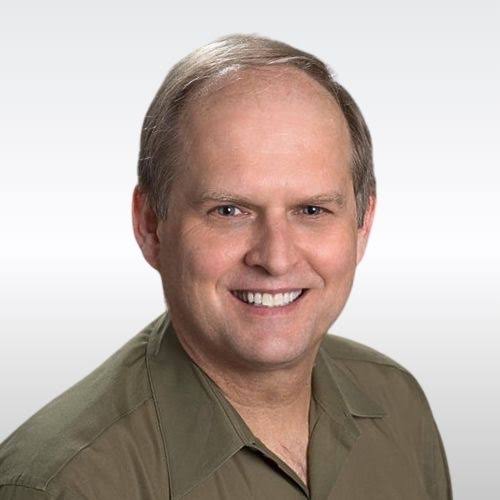
Robin Hanson on futarchy, decision markets, why insider trading complaints are opportunistic, and why prediction markets should be judged against journalism.
Key takeaways
- Hanson's standard move: judge prediction markets against journalism, gossip and academic journals, rather than against perfection.
- Futarchy is decision markets applied to governance. You vote on values and bet on which option delivers them.
- MetaDAO has made roughly a hundred decisions this way, and its constitution requires it for major ones.
- No major venue offers decision-conditional contracts. Hanson names this as the feature he most wants added.
- On insider trading in ordinary stocks: roughly half of a price move around an announcement happens before it.
- His long-term hope is that people who want information become paying customers, a bigger market than hedging and entertainment combined.
Chapters
"A lot of what many people don't like about prediction markets is what they don't like about ordinary financial markets, but maybe just don't know."
Most traders lose, and that is not new
We put our whale concentration data to him: roughly 3% of traders drive most price discovery on the largest venues. He was unmoved, because he thinks that describes markets generally.
"Ordinary financial markets have also had this feature for a long time, which is that most traders lose on average in their trades. That's just the nature of ordinary market, and as you notice in poker as well."
His advice to individuals is blunt: you are trading against world-class people, so be world-class or stay out. Then he reframes the question. If the point of these markets is information rather than trading profit, the comparison should not be to an idealized crowd.
"If we think about prediction markets as an information institution, I think the comparison should be to other information institutions, like journalism or gossip or academic journals. And then in those institutions, we're okay with the idea that there's net resources going into those institutions, because the information coming out is the value."
He is not romantic about how that gets funded:
"I might rather that we found a way to pay for these markets other than basically taxing fools, but the fools have volunteered themselves to be taxed."
Insider trading, and the double standard
On the enforcement wave of 2026, Hanson thinks the complaint is opportunistic rather than principled. His first point is factual.
"When a company makes a public announcement that will typically move the price of the company, half of that move happens before the announcement. Half of that is probably insider trading."
His second is about consistency. Many of journalism's most celebrated moments, he notes, were cases of inside information reaching the public against an organization's wishes, which makes the proposed remedies look selective.
"Some people have proposed that US government officials not be allowed to trade in markets, because they might reveal secrets that way. I'd say, well then don't let them talk to reporters, because they might reveal secrets that way. Just have similar policies."
As for why insider trading became the attack line rather than problem gambling, he thinks US incumbents losing revenue to federally regulated event contracts are hunting for whatever complaint gains traction: "they are opportunistically looking for what they can complain about."
Complaining about resolution errors is a compliment
The best exchange of the episode came when Dren raised manipulated resolutions on token-vote settlement. Hanson turned the question around.
"Your complaining about this very infrequent problem about prediction markets is a sign of your praise for them. You're actually pretty sure there's a large fraction of journalistic articles that are wrong, and you just accept that as the usual case. But you have a rare case for the market being wrong, and now you're upset. Why? Because you're holding this to a higher standard."
Asked for the correct resolution design, he declined to name one.
"What I want is a competitive world of different institutions that do it different ways and let the customer reputation sort it out. I wouldn't want this to collapse to one main market that rules everything."

What is Futarchy?
Hanson's own interest was never in markets on the questions already in the news. Standard decision theory, he argues, says information matters mainly when it informs a specific decision.
"The most valuable markets would actually be markets that sit right next to particular decisions and directly advise those decisions. And that's what I call a decision market."
The structure is always the same three parts.
| Component | Election example | Company example |
|---|---|---|
| Discrete options | Which candidate to nominate | Keep the CEO, or replace them |
| Outcome metric | Chance of winning the general election | The company's stock price |
| Conditional prices | Nomination odds against general-election odds | Stock price conditional on each choice |
Futarchy is that mechanism applied to governance, which is where the voting comes in.
"Futarchy is just another name for applying that to governance. And in governance you'll need to decide what the outcome metric is, and that's where you might say vote on values."
Why almost nobody has adopted futarchy until now
The experiments are real but small. MetaDAO, whose constitution requires major decisions be made this way, has made roughly a hundred. An India-based agency used it for a period, and a company run by Jeffrey Wernick used it in the 1980s. Hanson is now running lab experiments, because field data cannot show what the rejected option would have produced. His verdict is deliberately modest. "So far it looks pretty good."
The obstacle is political rather than technical, and his explanation is the most memorable thing he said. Picture a person at a company's top table who knows the business cold, speaks only relevant truths, and has no idea what anyone's agenda is.
"We predict this person won't be allowed to sit at this table very long. It's too disruptive to the others. But that's basically what prediction markets are. They are this disruptive source that you can't control or predict that's just gonna give its best estimate, regardless of who that aligns with."
He declines to blame anyone for killing past experiments, including DARPA's Policy Analysis Market: "most everyone's pretty nearly equally at fault for not trying this." His cautionary precedent is the Hollywood Stock Exchange, which ran play-money markets on films, won legal permission for real-money trading, then was banned after the movie industry lobbied Congress.
"You prove that things work, and then people lobby to make them illegal because they don't like the outcomes."
The customer who does not exist yet
Three demands drive these markets today: risk transfer, entertainment, and information. Only the first two get paid for.
"Most people who get information from these markets, who value the information, aren't paying for it. And that's what I'd like to see change. If you can actually tap the market where people pay for the information they want, that's a much larger market than the other two."
No major venue offers decision-conditional contracts yet. He names Metaculus and Manifold as the only places doing it, and calls it the feature he most wants added.
On AI traders he is untroubled, since "the markets are designed to be robust to who participates in them." On AI replacing markets entirely, he is disarmingly consistent.
"If I tell you the reason why X is good is because it achieves Y, and then you show me some other Z that achieves Y even better, then I gotta say, okay, even better."
He has been right about timing twice, on the web and on prediction markets existing at all. He is careful about a third:
"I can tell you this will happen eventually, but I don't know when."